
Dental Health
What Is a Denture Reline, and When Do You Need One?
By Dr. Terry · September 4, 2026 · 9 min read
Learn what a denture reline involves, the signs it's time for one, and how often it's needed. Trusted denture care from Alpine Dental in Manchester, NJ.
Introduction
Dentures are built to fit the exact shape of your gums and jaw on the day they're made, but that shape doesn't stay the same forever. As the bone beneath your gums naturally reshapes itself over months and years, a denture that once felt secure can start to feel loose, slip while you're eating, or rub against sore spots you didn't have before. A denture reline is often the simplest way to restore that fit without replacing the entire appliance. At Alpine Dental in Manchester, NJ, we see denture wearers at every stage of this process, from patients who just noticed their first bit of looseness to those who have been managing discomfort for months. This guide walks through what a denture reline actually involves, the signs that tell you it's time for one, and how it differs from getting a brand new set of dentures.
What Is a Denture Reline?
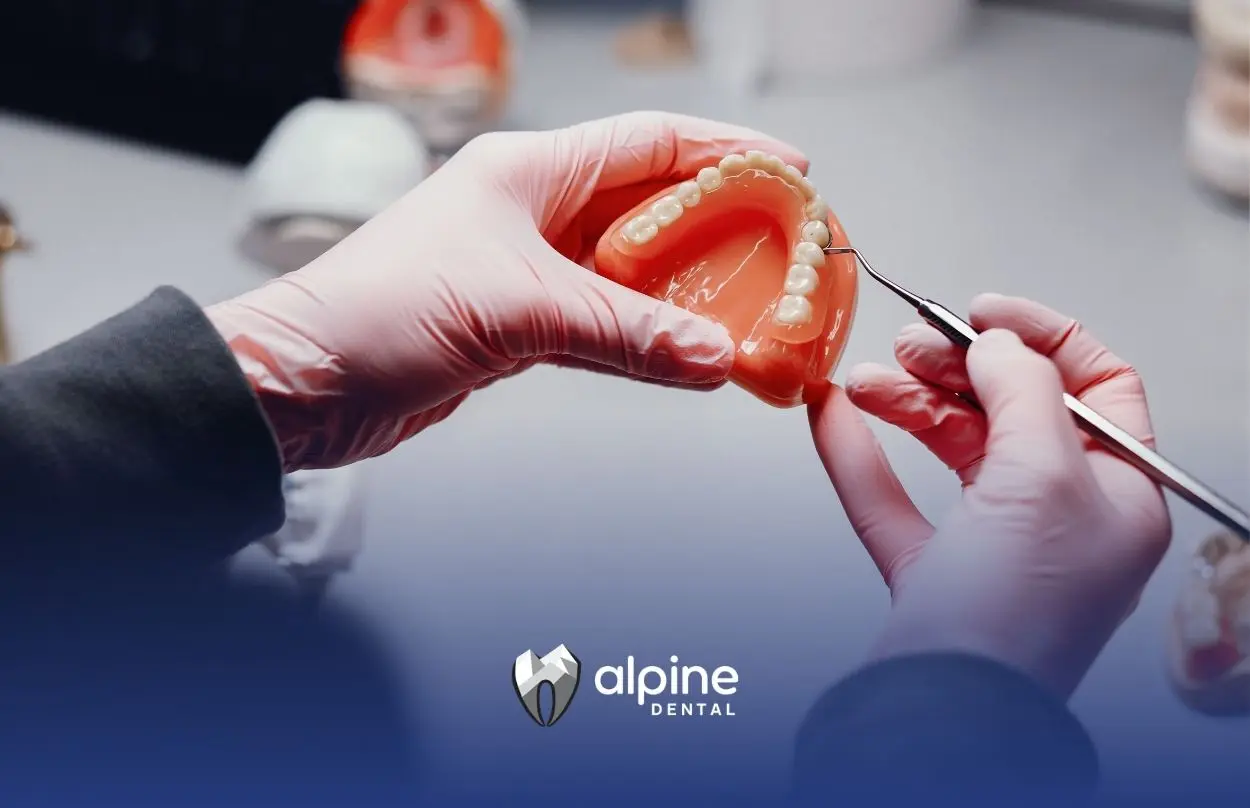
A denture reline is a procedure that resurfaces the inner, gum-facing side of a denture with new material so it matches the current shape of your mouth. The visible teeth and the outer shape of the denture stay the same; only the surface that touches your gums is renewed. Think of it less like buying a new pair of shoes and more like replacing a worn-out insole so the shoe you already own fits properly again.
We often explain it to patients this way during exams: your denture was custom-molded to your mouth at one point in time, but your mouth keeps changing. A reline doesn't fight that change, it adjusts the denture to keep up with it.
A reline is different from a rebase, which replaces the entire base of the denture rather than just the tissue side, and it's different from getting new dentures altogether, which we'll cover further down.
Why Do Dentures Stop Fitting Over Time?
Natural Bone and Gum Changes After Tooth Loss
Once teeth are removed, the jawbone that used to support them no longer receives the stimulation it needs to maintain its shape and density, so it gradually resorbs. This is a normal, expected process, not a sign that something went wrong with your dentures. As the underlying bone changes shape, the space between your gums and the denture changes too, even though the denture itself hasn't moved.
Wear and Tear on the Denture Material
Beyond bone changes, the denture material itself wears down with years of biting, chewing, and cleaning. The base can lose some of its precise contact with the gums simply from repeated use, which adds to the fit problems caused by bone changes.
Signs You May Need a Denture Reline
Looseness or Slipping While Eating or Talking
If your dentures shift when you chew, laugh, or speak, that's often the clearest sign the fit has changed. Some patients tell us they've started avoiding certain foods, like apples or corn on the cob, because they're worried about their denture moving.
Sore Spots, Irritation, or Pressure Points
A denture that no longer sits evenly against your gums can create pressure in specific spots, leading to soreness, redness, or small sores. Occasional irritation after a long day of wear is common, but recurring sore spots in the same area usually point to a fit issue.
Increasing Reliance on Denture Adhesive
Adhesive can help stabilize a properly fitted denture, but if you find yourself using more of it than you used to, or applying it just to get through the day, that's often a sign the denture itself needs attention rather than more adhesive.
Visible Gaps or Rocking When You Bite Down
If you notice your denture rocking side to side, or you can see food collecting under one edge when you look in the mirror, this points to an uneven fit that a reline can typically correct.
Types of Denture Relines
Soft Relines
Soft relines use a cushioned, flexible material and are often recommended for patients with sensitive gums, thinner tissue, or recent extractions. They tend to feel more comfortable right away but generally need to be redone more often than hard relines, often every one to two years.
Hard Relines
Hard relines use a rigid acrylic material similar to the original denture base. They typically last longer than soft relines, sometimes two to four years or more, though they can feel firmer during the initial adjustment period.
Chairside vs. Laboratory Relines
A chairside reline is completed in the office in a single visit, with the material shaped and cured directly in your mouth. A laboratory reline involves taking an impression at your appointment, sending it to a dental lab for processing, and having the finished denture ready a few days later. Your dentist will recommend the option that best fits your specific denture and timeline.
How Often Should Dentures Be Relined?
There's no single answer that fits every patient, since the rate of bone and gum change varies from person to person. As a general guideline, many dentists recommend a reline roughly every one to two years, though a well-fitting hard reline can sometimes go longer before it needs to be redone. What matters more than a fixed schedule is how the denture actually feels. We recommend a dental checkup at least once a year so your dentist can catch fit changes before they cause discomfort, even if your dentures still feel reasonably secure.
What to Expect During a Denture Reline Appointment
A reline appointment usually starts with an exam to check your gums, bite, and overall oral health, since any irritation typically needs to be addressed first. From there, your dentist removes a thin layer of material from the inside of the denture and takes an impression of your current mouth shape using that same denture as the tray. Depending on whether you're having a chairside or laboratory reline, the new material is either cured in the office or sent out for lab processing. Once it's back, your dentist checks the bite and fit, making small adjustments until the denture sits comfortably and evenly.
In our experience, most patients notice an improvement in stability the same day the reline is completed, though it's normal to need a short adjustment period as your mouth gets used to the renewed fit.
Denture Reline vs. New Dentures: Which Do You Need?
A reline is usually the right choice when the denture's teeth and overall structure are still in good shape, and the only issue is fit. New dentures tend to make more sense when the teeth are visibly worn down, the denture is cracked or repeatedly breaking, your bite has shifted significantly, or bone loss has changed your mouth's shape so much that a reline can no longer create a stable fit. Your dentist can typically tell during an exam which situation applies to you, and if it turns out a full replacement is the better option, Dr. Kaitlyn Terry can walk you through your options. For patients looking for a longer-term alternative to a removable denture altogether, it's also worth asking about how dental implants might fit into your treatment plan.
Caring for Your Dentures Between Relines
Good daily care won't prevent bone changes, but it can help you get the most out of your denture between relines and catch fit problems early.
- Clean your denture daily with a denture-specific brush and cleanser rather than regular toothpaste, which can be too abrasive.
- Remove your denture at night to give your gums a rest, and store it in water or a denture-soaking solution so it doesn't dry out and warp.
- Avoid over-the-counter home reline or repair kits as a long-term fix. These products are intended for temporary use and are not a substitute for a professional fit evaluated by a dentist.
- Keep up with regular dental visits, even if you have no natural teeth left, so your dentist can check your gums, bite, and denture fit.
Bringing your denture along to routine general dentistry checkups gives us the chance to catch small fit issues before they turn into sore spots or difficulty eating.
Conclusion
A denture reline is a straightforward way to restore comfort and stability to a denture that no longer fits the way it used to, without the cost or adjustment period of a brand new appliance. Watching for looseness, sore spots, or a growing reliance on adhesive can help you catch the right time for a reline before it affects your eating or confidence. If it's been a while since your last checkup, or your denture just doesn't feel like it used to, our team at Alpine Dental in Manchester is here to check the fit and recommend the right next step.
Schedule a Denture Reline in Manchester, NJ
Alpine Dental proudly serves patients throughout Manchester Township and Whiting along with surrounding Ocean County communities.
If your dentures feel loose, uncomfortable, or you're overdue for a checkup, call us at (732) 350-7700 or book an appointment online and let our team help you get back to a comfortable, confident fit.
Frequently Asked Questions
How long does a denture reline last?
A soft reline typically lasts around one to two years, while a hard reline can last two to four years or longer, depending on how much your gums and jawbone continue to change. Your dentist can give you a more specific timeline based on your denture type and oral health.
Is a denture reline painful?
A denture reline itself isn't typically painful, though you may feel some pressure during the impression and fitting steps, and mild tenderness for a day or two while your mouth adjusts to the renewed fit. Any pain that lasts beyond a few days should be checked by your dentist.
Can I reline my dentures at home with an over-the-counter kit?
Over-the-counter reline kits are designed for short-term, temporary use only and aren't a substitute for a professional reline. A poorly fitted at-home reline can worsen sore spots or bite problems, so it's best to have any lasting fit issue evaluated and corrected by your dentist.
SOURCES:
- https://www.ada.org/resources/ada-library/oral-health-topics/dentures
- https://my.clevelandclinic.org/health/treatments/10900-dentures
- https://my.clevelandclinic.org/health/articles/10901-denture-care
- https://www.gotoapro.org/dentures-faq/
- https://www.fda.gov/regulatory-information/search-fda-guidance-documents/otc-denture-cushions-pads-reliners-repair-kits-and-partially-fabricated-denture-kits-guidance
- https://pubmed.ncbi.nlm.nih.gov/21324026/