
Dental Health
How to Clean Dentures: A Daily Care and Storage Guide
By Dr. Terry · November 21, 2026 · 10 min read
Learn how to clean dentures the right way: a daily routine, why toothpaste and hot water damage acrylic, overnight storage, and denture stomatitis prevention.
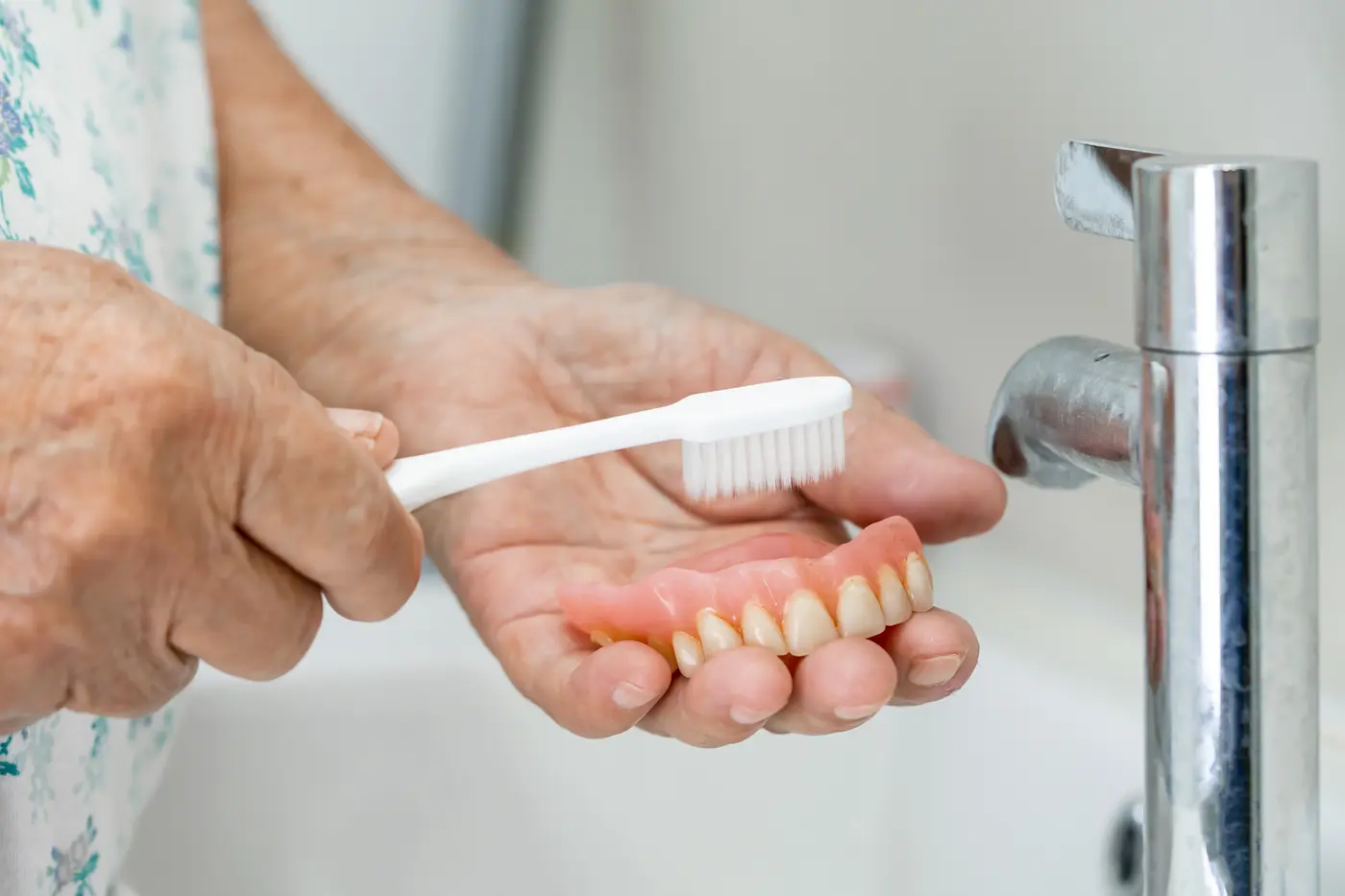
Getting your first set of dentures is a big step, and within a few days most people ask the same practical question: how to clean dentures without damaging them. It sounds simple, yet it is where new wearers most often go wrong, because the habits that protect natural teeth can actually harm acrylic.
This guide walks you through a simple daily routine, explains why regular toothpaste and hot water damage dentures, shows you how to store them overnight, and covers how to prevent denture stomatitis, a common but avoidable irritation of the gums. Whether you are new to dentures, helping a parent, or sharing a handout with patients, you can start using these steps today.
Why Denture Care Matters From the First Week
Dentures are precisely made and, in many ways, more delicate than natural teeth. Plaque and food stick to them just as they do to your own teeth, and when they are not cleaned well, the result is stains, odor, and sore or inflamed gums.
At our Whiting office, we've seen that the first few weeks set the habits people keep for years. New wearers who learn a clear routine early tend to have fewer sore spots and fewer questions later. That is why our team walks patients through cleaning at their denture appointments, so nobody has to guess at home.
How to Clean Dentures: Your Daily Routine
The general rule is simple: rinse, brush, and soak, every day. Here is how to do each step well.
Step 1: Rinse After Meals
Take your dentures out after eating and run water over them to wash off loose food. Do this over a folded towel or a sink filled with water. Dentures can crack or chip if they slip from your hand onto a hard surface, and a soft landing costs you nothing.
Step 2: Brush Gently at Least Once a Day
Use a soft-bristled brush, ideally one made for dentures, with a little hand soap, mild dish liquid, or a non-abrasive denture cleanser. Brush every surface, including the grooves that sit against your gums. If you use adhesive, clean out any leftover residue from those grooves.
Gentle is the key word. Pressing hard does not clean better, and stiff bristles can wear down the surface. When shopping for cleansers, look for the ADA Seal of Acceptance, which means the product has been evaluated for safety and effectiveness.
Step 3: Clean Your Mouth, Not Just Your Dentures
With your dentures out, gently clean your gums, tongue, cheeks, and the roof of your mouth with a soft toothbrush or a piece of gauze. If you still have natural teeth, brush and floss them as usual. Removing plaque from the tissue that supports your dentures is just as important as cleaning the dentures themselves.
Step 4: Rinse Again Before Wearing Them
If you used a soaking solution, rinse your dentures thoroughly before putting them back in. Denture cleansers are made for cleaning the appliance, not for use inside your mouth.
A Simple Daily Checklist
- After meals: Remove, rinse, and rinse your mouth.
- Once a day (at least): Brush dentures and gently clean gums and tongue.
- At bedtime: Take dentures out, brush, and place them in water or a soaking solution.
- In the morning: Rinse well before wearing.
Why Toothpaste and Hot Water Damage Acrylic
Your natural enamel is very hard. Most denture bases are made of acrylic, a much softer material that scratches and bends more easily. That is why advice for natural teeth does not carry over.
Regular and Whitening Toothpaste Are Too Abrasive
Toothpaste contains abrasives designed for enamel. On acrylic, those same abrasives leave tiny scratches, and scratches give plaque, stains, and odor-causing bacteria a rougher surface to cling to. Whitening toothpastes are especially abrasive, and the peroxide they contain does little to change the color of denture teeth.
One of the most common things we hear in our sessions is, "I've been brushing with my regular toothpaste." The fix is easy and inexpensive: switch to a soft brush with mild soap or a denture-safe cleanser, and the surface stays smoother and easier to keep clean.
Hot Water Can Warp the Fit
Never soak dentures in hot or boiling water, even to "sanitize" them. Heat can bend the plastic, and a denture that is even slightly out of shape will no longer fit your gums the way it was made to. That can lead to rubbing, sore spots, and looseness, and a warped denture often cannot be fixed with a simple adjustment. Cool or room-temperature water is the safe choice.
Other Products and Habits to Skip
- Bleach-based products: Soaking dentures in bleach can whiten the pink part of the denture, changing its natural look.
- Scouring powders and stiff brushes: These are too harsh for acrylic.
- Do-it-yourself repairs: Super glue and home fixes can make a break harder to repair properly. If something cracks, see us instead. Our post on which denture repairs can be done in a day explains what to expect.
- Cleansers on partials without asking: If you wear a partial denture with metal clasps, ask your dentist which cleanser is safe for those parts.
How to Store Dentures Overnight
Dentures should come out at night so your gums can rest, and they should stay moist while they are out.
Why Dentures Need to Stay Moist
Most types of dentures need to stay moist to keep their shape. Leaving them on a dry counter for hours is not the same as soaking them. Place them in water or a mild denture-soaking solution overnight, and check with your dentist about the best storage method for your type of denture.
Water or Soaking Solution?
Either can work. Plain water keeps dentures moist, and a mild denture-soaking solution adds extra cleaning power. If you use a solution, follow the package directions exactly, use cool water, and rinse your dentures well in the morning. Your dentist can recommend a specific product if you have a partial denture, a stubborn stain, or sensitive gums.
Keep Them Safe: Case, Cup, and Out of Reach
Use a dedicated lidded denture cup and keep it somewhere stable, away from the edge of the sink. If you share your home with young children or pets, store it out of reach, since a denture left on a counter is an easy target for curious hands and teeth. Avoid wrapping dentures in a tissue or napkin, because they are easily thrown away by mistake. When you travel, pack your case and a small amount of cleanser so your routine does not change.
Preventing Denture Stomatitis
Denture stomatitis is one of the most common problems denture wearers face, and it is largely preventable with the habits above.
What Denture Stomatitis Is
Denture stomatitis is inflammation of the tissue under a denture, most often under an upper denture. Reviews in dental journals describe it as very common, affecting somewhere between 20% and 80% of denture wearers. It is mainly linked to poor oral hygiene, poor denture hygiene, and wearing dentures around the clock, especially overnight. The yeast Candida is often involved. Because it is usually painless, many people do not know they have it until a dentist spots it.
Habits That Lower Your Risk
- Take dentures out at night. Saliva flow drops overnight and bacteria counts rise, which is why continuous wear is linked to irritation under the denture.
- Clean dentures and gums daily. Plaque on the denture surface and on the palate gives bacteria and yeast a place to grow.
- Do not skip checkups. A denture that has stopped fitting well can irritate the tissue beneath it, so regular visits protect both fit and comfort. Our general dentistry team checks your gums and denture fit at routine visits.
- Watch for dry mouth. Dry mouth can make dentures less comfortable. If you take blood pressure or heart medication, read our guide to dry mouth from heart medications.
Warning Signs to Watch For
Call us at (732) 350-7700 if you notice any of the following under your denture:
- Redness, swelling, or a shiny look to the tissue
- Tiny red dots on the roof of the mouth
- Soreness, burning, or a bad taste
- Cracking or irritation at the corners of your mouth
Treatment usually starts with careful cleaning of the denture and the tissue, and your dentist will tell you whether anything more is needed. Please do not treat it on your own.
Helping a Parent or Loved One With Denture Care
Many of our patients are helped by a spouse, adult child, or caregiver. A few practical tips make the routine easier:
- Tie it to daily anchors. Rinse after meals and clean at bedtime, so it becomes automatic.
- Set up one spot. Keep the soft brush, cleanser, towel, and cup together at the sink.
- Check the mouth. Look for redness, sores, or a denture that moves when your loved one talks or eats.
- Label the cup. In shared homes or care settings, a labeled case prevents mix-ups.
Dental assistants and caregivers teaching new wearers can demonstrate each step over a towel-lined sink and hand over a written checklist, since seeing the technique once is usually more helpful than hearing it. If you are caring for a parent and kids at the same time, our children's dentistry services mean the whole family can be seen by one team.
If your denture is anchored by implants, cleaning instructions can differ depending on whether it is removable or fixed. Ask us for steps specific to your type, and learn more about dental implants as an option for a more secure fit.
When to See Your Dentist
Denture care at home keeps things clean, but it cannot fix fit problems. See your dentist promptly if your dentures feel loose, rub, click, or cause sores, since loose dentures can lead to irritation, sores, and infection. Over time, the shape of your jawbone changes, so even well-cared-for dentures may need a reline or replacement. Our post on denture relines explains how to tell when it is time.
If a denture breaks, or you have severe pain or swelling, contact our emergency dentistry team right away rather than trying a home fix.
Conclusion
Clean dentures are comfortable dentures. Rinse after meals, brush gently every day with a soft brush and a non-abrasive cleanser, and clean your gums and tongue too. Skip regular toothpaste and hot water, which scratch and warp acrylic. Take dentures out at night and keep them moist in water or a mild soaking solution. And since denture stomatitis is common and often painless, keep up with checkups so problems are caught early.
Ready for a denture check or a cleaning lesson?
At Alpine Dental Manchester, our team welcomes patients from Whiting, Manchester Township, and Crestwood Village.
Contact us at (732) 350-7700 or book an appointment at our Whiting office today.
Frequently Asked Questions
Can I use toothpaste to clean my dentures?
No. Regular and whitening toothpaste are abrasive enough to scratch acrylic, which makes dentures harder to keep clean and more likely to stain. Use a soft brush with mild hand soap, dish liquid, or a non-abrasive denture cleanser instead.
How should I store my dentures overnight?
Take them out at night and place them in a lidded container of cool water or a mild denture-soaking solution so they stay moist and keep their shape. Never use hot or boiling water, and rinse them well before wearing them in the morning.
How often should I clean my dentures?
Rinse them after meals and brush them at least once a day, then soak them overnight. Cleaning your gums, tongue, and palate daily is part of the routine, and it helps prevent denture stomatitis.
SOURCES:
- https://www.mayoclinic.org/denture-care/expert-answers/faq-20058375
- https://mouthhealthy.org/all-topics-a-z/dentures
- https://my.clevelandclinic.org/health/articles/10901-denture-care
- https://www.prosthodontics.org/denture-stomatitis---an-interdisciplinary-clinical-review/
- https://www.pubmed.gov/36988151/
- https://www.smilesforlifeoralhealth.org/topic/denture-care/
- https://www.dentalhealth.org/denture-cleaning